
Latest developments - Andover Road
The plan to redirect traffic from the B3420 Andover Road in Winchester along Winchester Avenue through Kings Barton:
It is likely and foreseeable that the decision to divert traffic from the B3420 Andover Road through the Kings Barton estate will lead to more accidents and casualties, as well as other disadvantages. We therefore question whether this decision is rational and reasonable.
Our key points:
-
Winchester Avenue has a high concentration of social, affordable and shared-ownership terraced housing, as well as a primary school, community centre and many side roads. It is a low-capacity road and is unsuitable for carrying the diverted traffic. The likely consequences for Kings Barton residents include:
Road casualties - Traffic accidents are likely to increase.
Community severance - The volume of traffic along Winchester Avenue will make it harder to cross presenting a physical and psychological ‘barrier’ to movement and separating residents from one another and from children’s play parks.
Noise and Air Pollution and Carbon Emissions - Will dramatically increase, due to traffic queuing in the neighbourhood centre and at access roads and pedestrian crossings.
-
Harestock and Weeke where residents will suffer additional traffic on their residential roads such as Harestock Road, Priors Dean Road and Bereweeke Avenue, and
Headbourne Worthy and Kings Worthy where residents will suffer additional traffic on Springvale Road, Worthy Road, Wellhouse Lane and Down Farm Lane.
-
More generally, all Winchester residents will suffer from delays in reaching the A34 for travel northwards and residents of Littleton, South Wonston and Sutton Scotney will suffer from delays travelling to the city centre with additional negative consequences for emergency services.
Reports:
Dr Steve Lawson has prepared two documents on the decision to divert traffic from the Andover Road through Kings Barton. And also shared an Donald Appleyard and Mark Lintell published article on community traffic severance
About Dr Steve Lawson
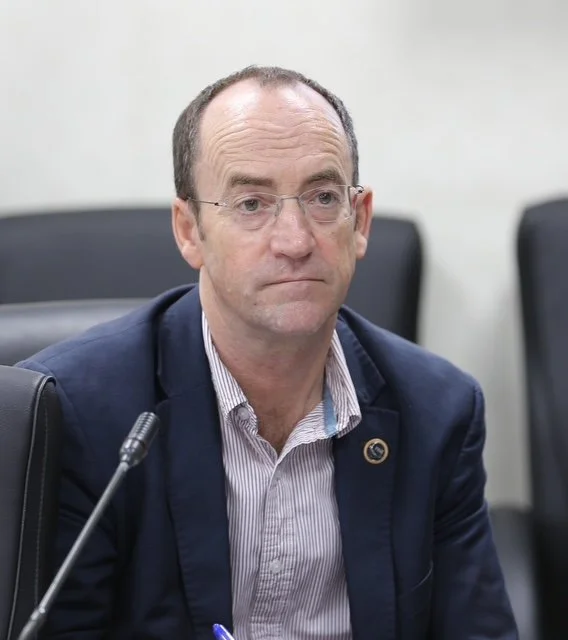
Dr Steve Lawson received a PhD (highway engineering) from the University of Birmingham for work on statistical modelling of the effect of infrastructure and other variables on road crashes. He worked for universities and road authorities on traffic and crash analysis for 10 years, then headed policy research at a UK motoring organisation for 15 years. Research, recognised by several awards, includes publications on the modelling of road crashes, road assessment, accidents involving young pedestrians and red-light running.
From 2000 onwards Steve worked for the European Road Assessment Programme as its original technical director and then for the International Road Assessment Programme, latterly as Director, Europe Middle East and Africa. He has also served as acting director of the Road Safety Foundation and as an adviser to the UK and Scottish governments and European agencies on research and policy and a representative to the UN Road Safety Collaboration. Now mainly retired, Steve has been involved in supporting several European projects.
Latest Hampshire Chronicle coverage:
https://www.dailyecho.co.uk/news/26533357.controversial-kings-barton-traffic-plans-approved/
